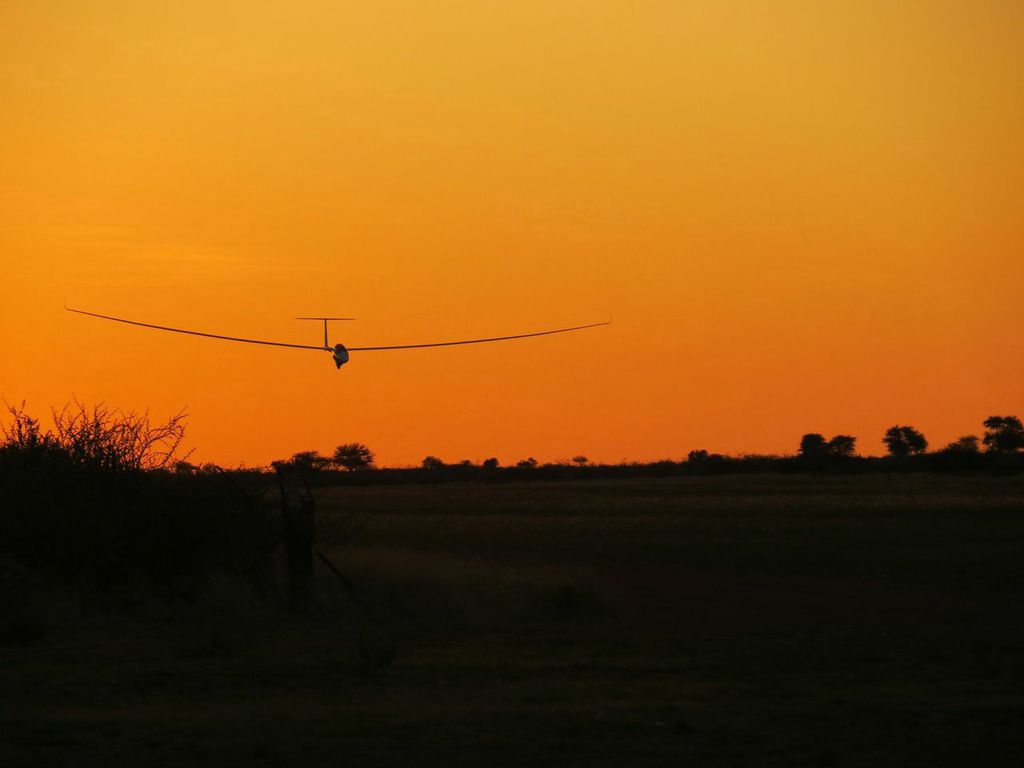
A day of flying at Kiripotib
Thursday, 8 January 2015
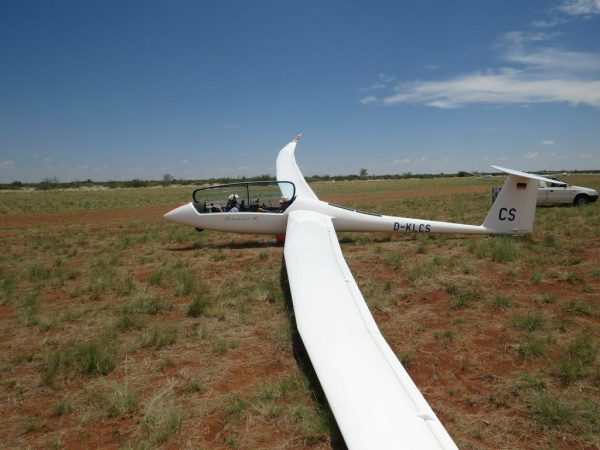
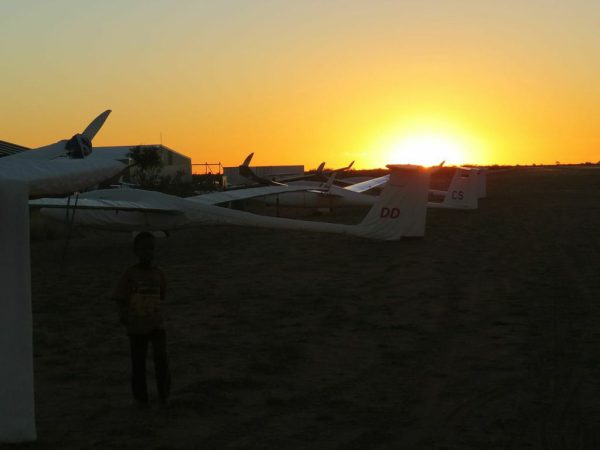
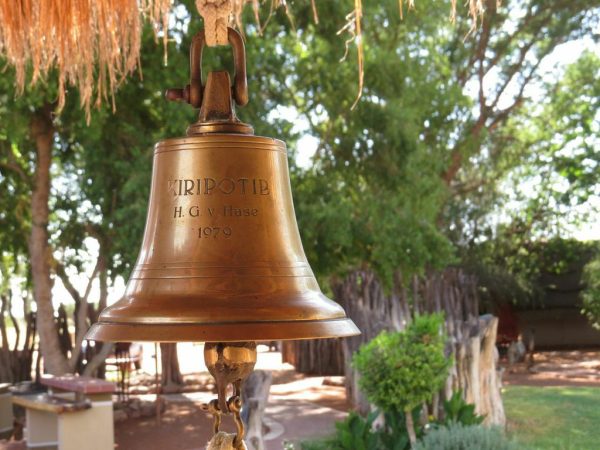
Kiripotib, to the north of Namibia’s “gliding zone”, is a farm with two crossed dirt runways. The conditions for gliding are very good and the organisation is perfect. The flying atmosphere is excellent.
Today is the fifth day of flying at Kiripotib. On the previous days we flew 770 km, 825 km and 970 km.
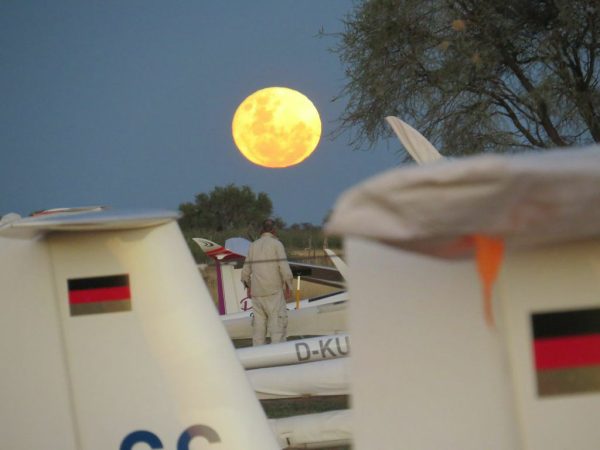
At 7 in the morning we prepare the glider, before it gets too hot: take off the covers, refuel with petrol and water and prepare the oxygen.
After breakfast comes the briefing. The forecast is tricky because of the chance of showers in the afternoon; we are advised to fly east and, in the afternoon, to stay east of the Nossob river. People are not too enthusiastic after many days of 1,000 km distances.
We declare a 777 km FAI triangle: Kiripotib, Buitepos, Lendepas and back to Kiri.
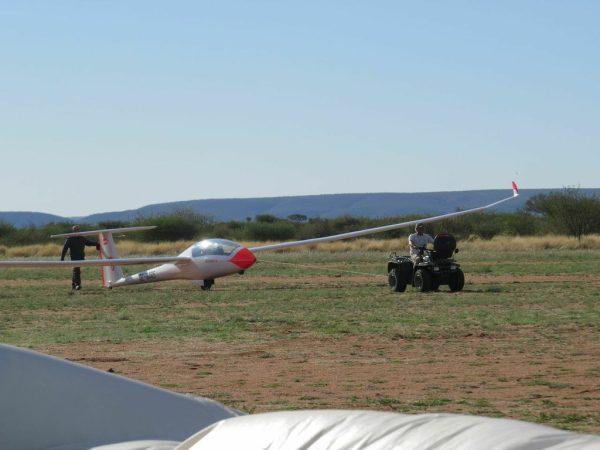
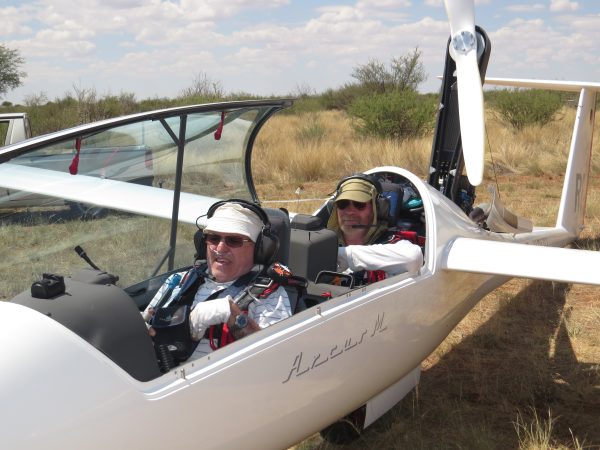
We are the first to launch, at 11. Once the engine checks are done, we open the throttle and start the take-off run on runway 26. It is very hard to accelerate the Arcus on a dirt runway at 1,365 metres of altitude. At around 800 metres the glider already has the speed to lift off, but it needs help with the “landing” flap. We accelerate to 95 km/h and gently change the flap to +2. Just past the end of the runway we find a very good thermal, with a vario reading between 5 and 7 m/s. We soon have 1,000 metres above the ground and shut down the engine. We stay in the thermal and, by the time we have finished cooling and stowing the engine, we are almost at 1,500 metres. This is atomic! We call the other gliders on the radio to hurry up and launch.
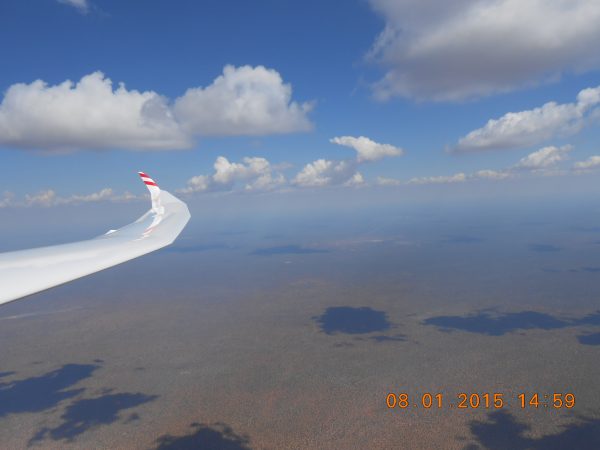
Once we reach the cloudbase we see there are very nice clouds to the west, towards Rehoboth. We decide to change plans and head there, instead of going east as per the task we had declared. Conditions are very good with cloudbases of over 4,000 m and we fly under clouds as far as south of Rehoboth. We decide to turn back 100 km from Kiripotib before conditions get complicated in this sector. We have averaged 111 km/h since the start. We make the run back to Kiri very fast, at close to 180 km/h on average and almost without circling.
Once at Kiripotib we activate the task originally planned. With the 200 km we have already done and the 777 km of the task we would be close to 1,000 km. At the speed we are doing right now it is feasible. We continue towards Buitepos, on the border with Botswana. Conditions are very good and we keep a high average as far as Gobabis. From this point on conditions are good but weaker and our average speed drops to around 120 km/h. This makes the task difficult: we won’t have enough time if we carry on like this.
At Buitepos we turn south and the way ahead looks good, but we can’t push as hard. We have 270 km to the next turnpoint. About 30 km south of Buitepos we enter Botswana because the clouds look better on this side of the border. We have to notify the Botswana frequency that we are entering their airspace, reporting position, altitude and heading. Some 50 km further south we re-enter Namibia, report in and carry on south.
By around 5 in the afternoon we are still 90 km short of Lendepas and 250 km from Kiripotib. We decide to cut it short and head home. The way looks fine, but we are worried about possible storms. As we get closer to Kiripotib a line of storms appears on our way back. We try to stay high as we push on.
75 km from Kiri there is a line of showers blocking our way, but between two showers there is light behind the shaded area. We call Kiri to find out what the conditions are but they can’t hear us. Shortly afterwards Kilo Papa answers, flown by Hanno, a Finn who passed between two showers 30 minutes ago and found it wasn’t raining much.
It seems to be the only option we have, even though the rain ahead of us is now very heavy and there is lightning. We head a little south and decide to cross the rain at the point where it looks weakest and there is sun behind. Soon the rain intensifies and we have a vario of -6.5 m/s for quite a while. Once we have crossed the rain we are very low and we get ready to start the engine. But hugging the wall of the storm we find a slight climb, even in the rain, and we push on a little towards Kiri. The computer says we arrive right on McCready 0, with no safety margin. We are about 30 km from the field and there is nothing landable along the way. Then it starts raining harder again and, to make sure of getting back, we decide to start the engine at 700 m above the ground over a road that looks landable as a last resort. We set the engine to full power and head for Kiripotib as we climb. At 15 km we shut down the engine and make a fast glide before the downpour arrives. We announce our position and ask for the runway in use. We could come in on 08 and go straight to the glider parking, but there is a 10-knot crosswind. We decide to land on 36 and someone has to come and fetch us.
Landing after the ordeal with the rain is a relief and we have a cold beer before getting the glider ready to tie down.
It has been a very interesting day. We flew 825 km before starting the engine, at an average speed of 128 km/h. All day between 3,000 and 4,000 metres, roughly between 1,500 and 2,500 above the ground.
Here you can see the flight on the OLC
http://www.onlinecontest.org/olc-2.0/gliding/flightinfo.html?dsId=4134281
Collection of photos from Kiripotib
https://www.dropbox.com/l/SxoaBUbe4FEEvckOATH6to
Text: Lluís Farré